
Last updated November 22, 2026
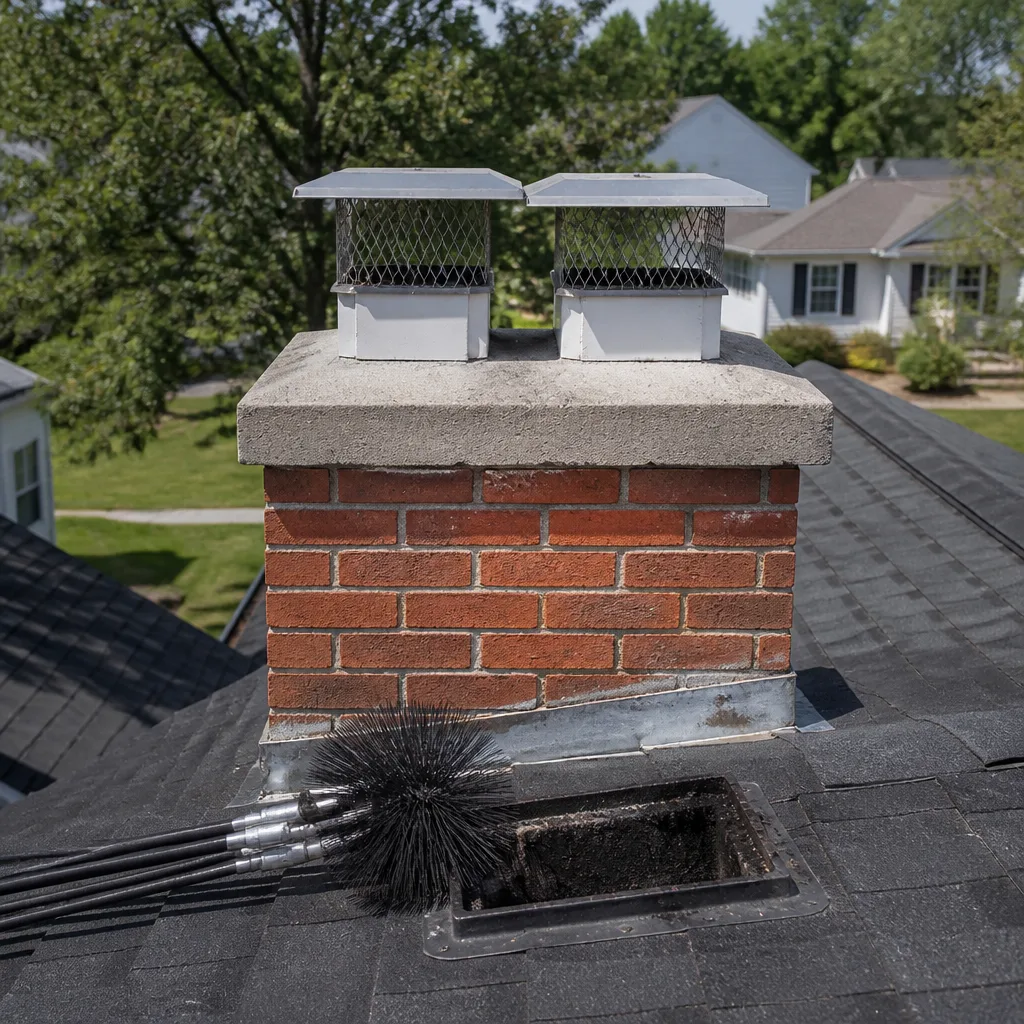 Sweep & inspection
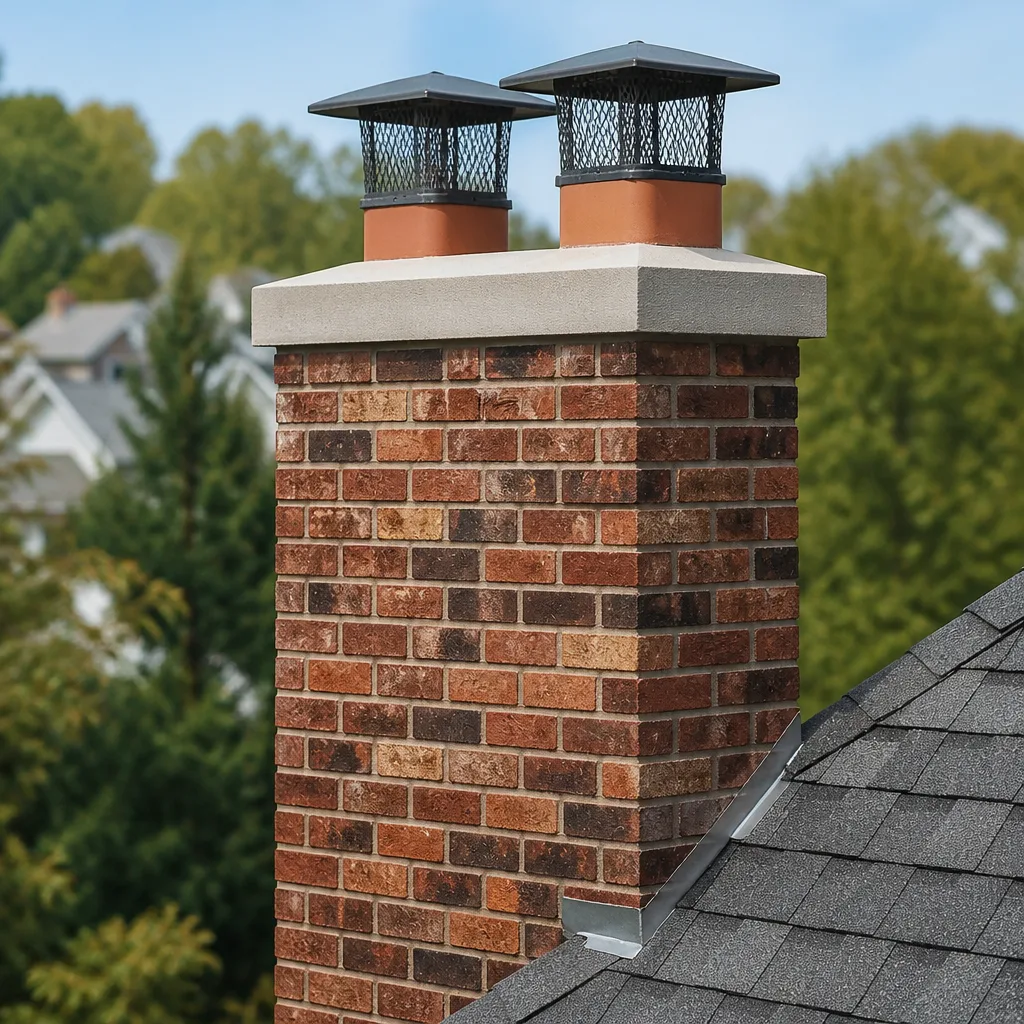 Caps & crowns
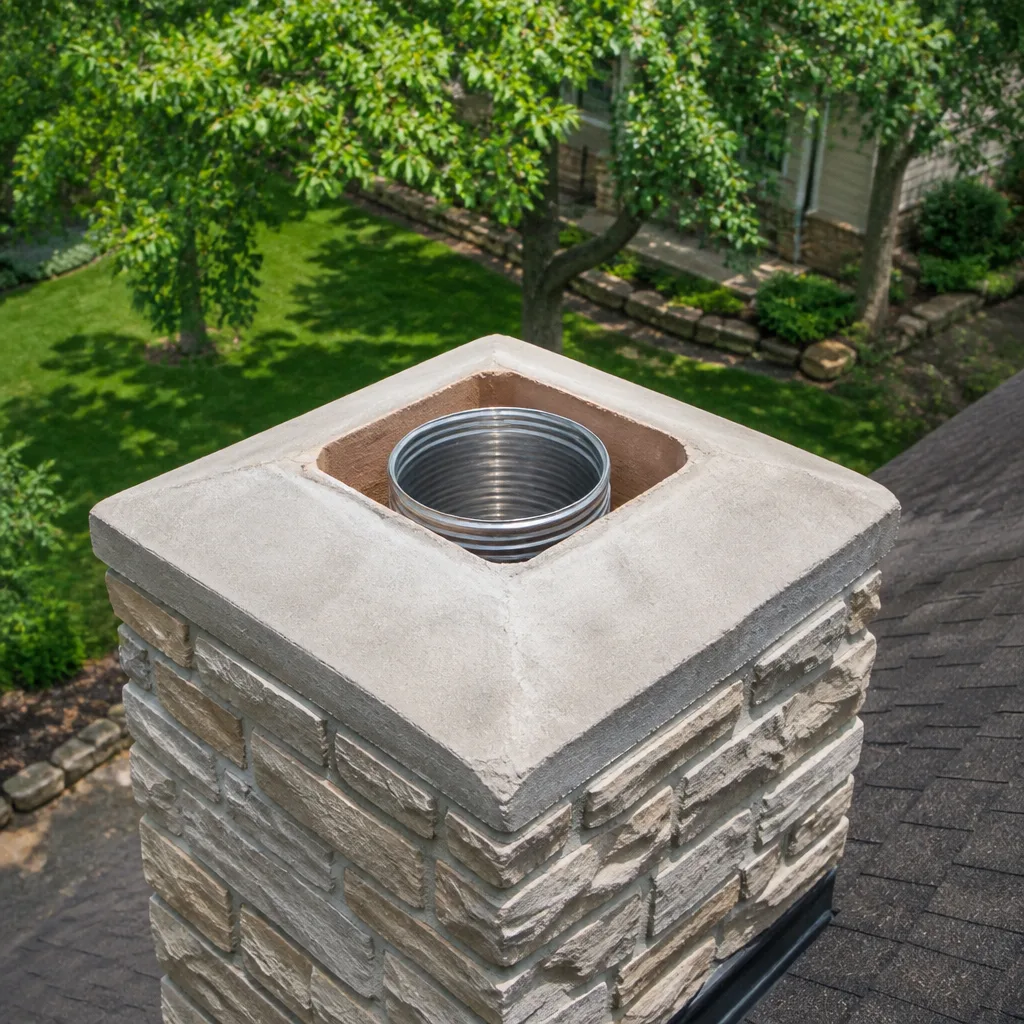 Flue relining
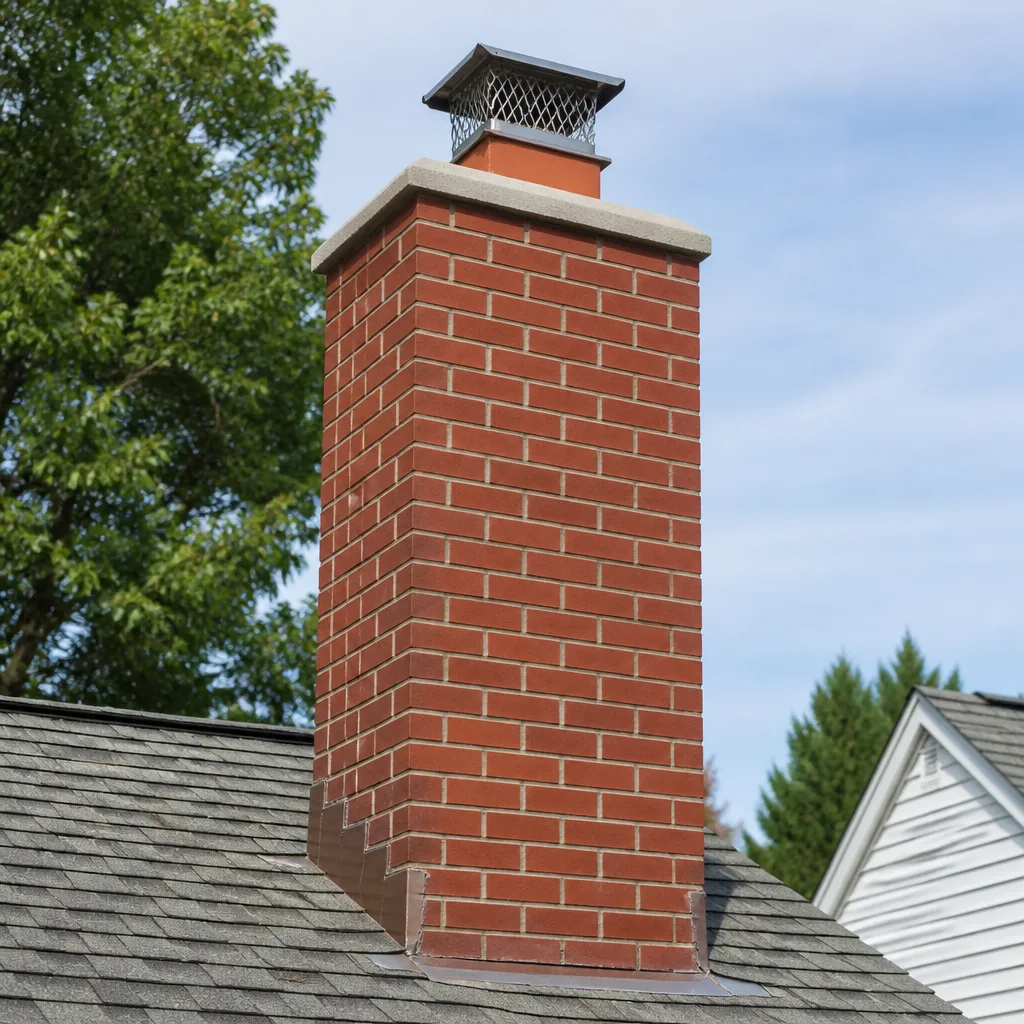 Masonry repair
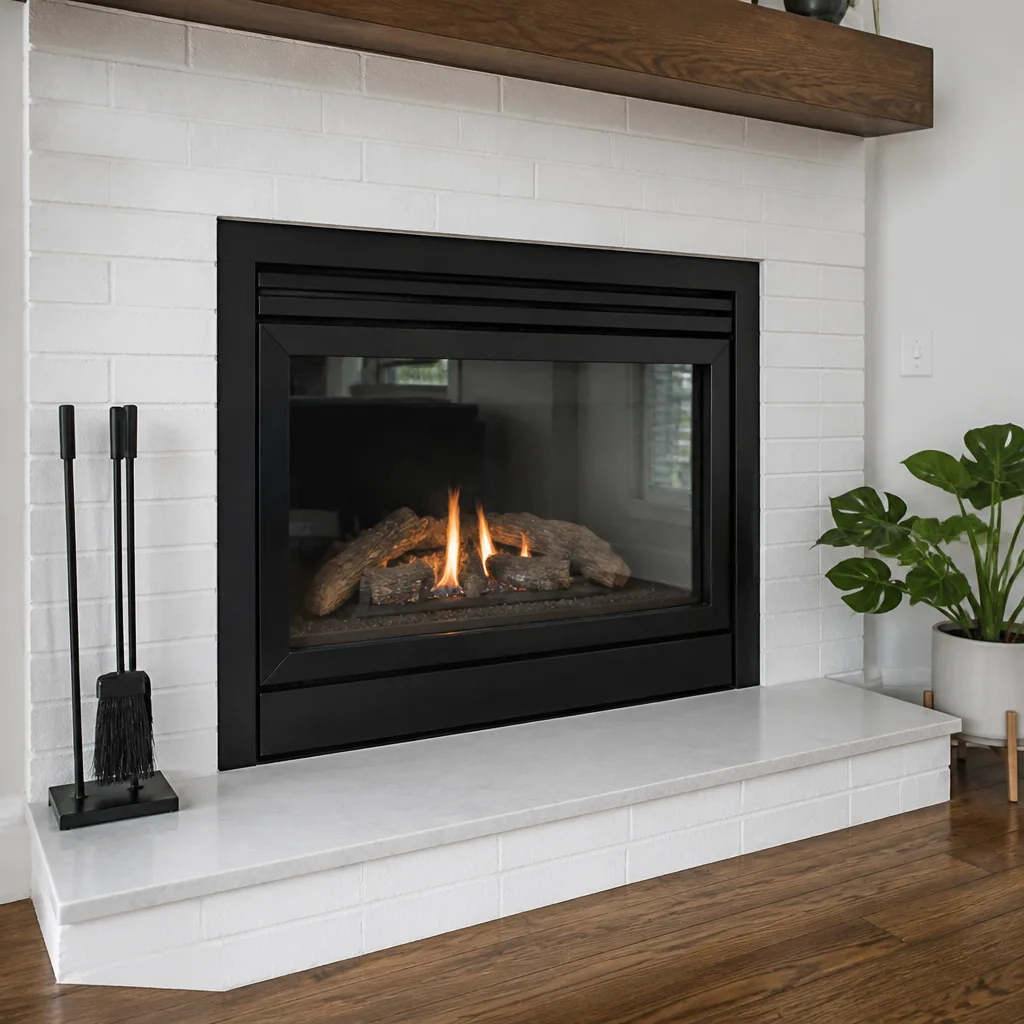 Gas fireplace service
Level 1 sweep and inspection to the NFPA 211 annual standard - flue, crown, cap, and flashing checked and photographed
Chimney sweep logs do not sweep chimneys. They loosen some creosote - which then falls where a brush and vacuum still have to collect it.
Chimney Cleaning Cost Breakdown: The Fox Chase Homeowner’s Reference for 2026
A $99 sweep quote and a $299 sweep quote aren’t the same job priced two different ways. They’re two different scopes. The cheaper visit often leaves out the smoke chamber, skips the written inspection report, and doesn’t include camera documentation of the flue, which happen to be the three things that actually tell you whether your chimney is safe to burn. In this guide we break down every line item you’ll see on a chimney cleaning invoice in Fox Chase, explain what legitimately pushes the price up, and give you realistic 2026 ranges for the repairs that often follow a cleaning in older homes. You’ll finish knowing how to read a quote instead of just comparing the bottom number.
Quick Answer
A standard chimney sweep in the Fox Chase area typically runs $175 to $350 in 2026 for an open fireplace, depending on liner type, roof access, and whether a Level 2 inspection with camera documentation is included. Wood stoves and inserts generally run $225 to $400, and oil flues $200 to $375. Repairs found during cleaning, such as firebox repointing, damper replacement, or a smoke chamber parge coat, commonly add $250 to $1,800 depending on scope, and a full crown rebuild can reach $2,500 or more. The written estimate sets the final price.
Styles & brands we work with
- Sweep & inspection
- Caps & crowns
- Flue relining
- Masonry repair
- Gas fireplace service
Table of Contents
- What a Standard Sweep Actually Covers
- Why Wood Stoves, Inserts, and Oil Flues Cost More
- What Legitimately Adds Cost to a Cleaning
- The Level 2 Inspection and Why Camera Documentation Matters
- Repairs That Commonly Follow a Cleaning in Older Fox Chase Homes
- How to Compare Chimney Cleaning Quotes Line by Line
- Long-Term Cost: The $350 Cleaning Versus the $3,500 Liner
- How a Fox Chase Winter Treats a Chimney
What a Standard Sweep Actually Covers
A standard sweep of an open fireplace includes three things: mechanical cleaning of the firebox and flue, a visual check of the accessible components, and a written report of what was found. If a quote doesn’t mention the third item, it’s a cleaning without documentation, and you’ll have no record of the chimney’s condition for next season or for a future home sale.
Here’s what a complete standard sweep for an open masonry fireplace should include:
- Drop cloths and a sealed work area to keep soot out of the room
- Cleaning of the firebox, damper area, and smoke chamber
- Brushing of the flue from the roof or from the firebox, depending on configuration
- Vacuuming with a HEPA-equipped unit so dust stays contained
- A visual check of the cap, crown, flashing, and exterior masonry
- A written report listing what was cleaned and what was observed
That last bullet is worth dwelling on. A sweep-only visit that produces no paperwork leaves you unable to compare this year’s condition to last year’s, and unable to show a buyer or an insurer that the chimney has been maintained. In our experience, the written report is the part of the visit that pays for itself first. When we connect you with a local professional through our chimney sweep service, the report comes with the cleaning, not as an add-on.
A standard sweep for a single-flue open fireplace in Fox Chase lands in the $175 to $350 range. That range is wide because the scope is wide: a one-story ranch with easy roof access and clean clay tile sits near the low end, while a two-and-a-half-story twin with a steep roof pitch and a stainless liner sits near the top.
Why Wood Stoves, Inserts, and Oil Flues Cost More
An open fireplace is the simplest chimney to clean, and it’s priced that way. A wood stove, a fireplace insert, or an oil appliance flue takes more time, more disassembly, and more careful handling, so the price rises accordingly. Expect to pay 25% to 40% more than a standard open-fireplace sweep for these appliance types.
What makes each one different:
- Wood stoves: the stovepipe or connector must be removed to reach the flue, gaskets often need replacing afterward, and creosote from a controlled-burn stove can be denser and harder to remove than from an open fire. Typical 2026 range in the Fox Chase area: $225 to $400.
- Fireplace inserts: the surround and sometimes the blower assembly must come off to clean the flue properly, and if the insert sits in an unlined or partially lined flue, the cleaning is only half the job. Typical range: $250 to $425.
- Oil appliance flues: oil-fired furnaces and boilers leave a different residue than wood, and the flue often has an existing liner that needs checking, not just brushing. Typical range: $200 to $375.
A wood stove or insert that’s been in place for years without a documented cleaning is a good candidate for a camera inspection during the sweep. Inserts installed in older masonry chimneys sometimes sit in a flue that was never properly sized or lined for that appliance, and no amount of cleaning fixes that. If it’s found, the checklist is the same whether you’re addressing cap and crown or the full flue.
What Legitimately Adds Cost to a Cleaning
Most of the price spread between a $175 sweep and a $400 sweep comes down to four variables. None of them are upcharges for the sake of it; each one reflects a measurable difference in labor, time, or materials.
- Liner type. A clean clay tile flue brushes out quickly. A stainless liner takes more care because the brush needs to match the liner’s diameter, and the liner itself must be checked for damage during cleaning. A parged flue or one that’s been resurfaced with a product like HeatShield ceramic resurfacing needs a gentler touch. A misapplied brush can scar a liner, so labor time goes up accordingly.
- Stories above the roofline. Roof access drives labor. A one-story chimney with a walkable roof and a secure ladder point is quick work. A chimney on a two-and-a-half-story Fox Chase twin with a steep pitch, or one where the ladder setup requires extra time, adds cost because the technician spends more of the visit on access and safety.
- Single-flue vs. two-flue systems. A chimney with two flues (a common arrangement in older Fox Chase homes with both a fireplace and a heating appliance) takes roughly double the cleaning time, and the price usually lands in the $275 to $500 range for both.
- Level 2 inspection with camera documentation. A standard visual check sees the parts the technician can reach with a flashlight. A Level 2 inspection adds a video camera run through the flue, with still images or video you keep. This is the piece that catches cracked tiles, gaps in parging, offset flue joints, and failed liner connections that a visual check can’t see. It typically adds $100 to $200 to a visit, and it’s the part of the invoice that most consistently earns its cost back.
A fifth variable, creosote stage, matters too. Stage 1 creosote brushes off like ash. Stage 2 is crusty and takes more passes. Stage 3 is the glazed, hardened layer that’s the primary cause of chimney fires, and it’s genuinely hard labor to remove. A sweep that hits Stage 3 creosote is a longer visit, and that shows up in the quote.
The Level 2 Inspection and Why Camera Documentation Matters
A Level 2 inspection is a camera-based examination of the flue from end to end, with images or video you keep. It’s the difference between a technician saying “your chimney looks fine from the firebox” and a technician showing you a cracked tile three feet above the damper that you can see for yourself.
The three levels of chimney inspection are worth knowing because quotes often don’t say which one they include:
- Level 1: a visual check of accessible components during a normal cleaning. Fine for a well-maintained chimney with no changes.
- Level 2: a visual check plus camera inspection of the flue. Required by industry standard after a chimney change, a new appliance, a property transfer, or an event like a chimney fire or earthquake. Adds $100 to $200 to a cleaning in the Fox Chase area.
- Level 3: a Level 2 plus opening walls or other destructive access to reach concealed areas. Rare, and usually only when a Level 2 turns up something that has to be seen directly.
Most Fox Chase homeowners we work with end up wanting a Level 2 the first time they use us, and a Level 1 on the routine visits after that. The first thorough look is where problems get caught. If your home has changed hands recently, has a wood stove or insert installed within the last few years, has had a chimney fire, or has never had a documented inspection, the Level 2 is the version to book.
The camera is also the answer to the biggest objection we hear: “How do I know I actually need the repair you’re recommending?” You know because you see the footage. Nothing on a recommendation should be based on a guess when the camera can look.
Repairs That Commonly Follow a Cleaning in Older Fox Chase Homes
Fox Chase has a lot of housing stock from the mid-20th century and earlier, and older masonry chimneys accumulate the same common failures. A cleaning is often where they get discovered. Here are realistic 2026 repair ranges for the work most likely to follow a sweep:
- Firebox repointing: $350 to $900. Mortar joints in the firebox crack and erode over time. Repointing restores the joints and keeps the firebox structurally sound. This is the most common repair found in older homes.
- Damper replacement: $300 to $750. Dampers seize, warp, or rust out. A damper stuck open wastes heat and lets water in; one stuck closed is a carbon monoxide risk.
- Smoke chamber parge coat: $450 to $1,200. The smoke chamber is the tapered area between the firebox and the flue. Rough, cracked parging there causes smoke to stall and draft poorly. A smooth parge coat improves draft and reduces creosote buildup. Products like HeatShield ceramic resurfacing are the professional-grade way to restore this surface without rebuilding it.
- Crown rebuild: $900 to $2,500+. The crown is the concrete cap on top of the chimney that sheds water away from the masonry. A cracked crown is the single most common path to water damage, and a rebuild is a multi-day job with formwork and curing time.
- Flue liner repair with HeatShield: $1,200 to $3,000. When a clay tile liner has cracks or gaps but is still structurally fit, ceramic resurfacing can restore it without a full reline. This is a technical job that most sweep-only outfits can’t perform, which is part of why it’s worth asking about directly.
- Full stainless liner installation: $2,500 to $5,500+. When the existing liner is beyond resurfacing, a flexible stainless system like DuraFlex is the standard fix. DuraFlex systems are designed for relining existing masonry chimneys and offer code-compliant installations with appropriate insulation.
We use professional-grade materials from brands chimney specialists rely on, including HeatShield, DuraFlex, Gelco, Olympia Chimney, Famco, and Copperfield, and we can handle the repair scope from a repointed firebox through a full rebuild. When we say the whole chimney can be handled under one company, we mean that literally: sweep, cap and crown work, repair, liner installation and rebuilds, and fireplace repair, all through a single relationship. Our chimney repair page covers the full repair scope. Our chimney cap & crown page covers the top of the system, which is where most water damage starts.
How to Compare Chimney Cleaning Quotes Line by Line
Comparing chimney cleaning quotes by bottom-line price is a mistake, because the bottom line is often the only thing two quotes have in common. The right comparison is scope item by scope item. Here’s the set of questions that turns a vague quote into a specific one:
- Does the quote include smoke chamber cleaning? Many sweep-only quotes clean the firebox and flue but leave the smoke chamber untouched, and that’s where creosote accumulates in tapered, hard-to-reach space.
- Does it include a written report? A written report is your record for next year and for resale. If it’s not on the quote, ask for it in writing.
- Does it include camera inspection, or is that extra? If the quote doesn’t say, it’s probably extra. Ask for the price with a Level 2 inspection included.
- Is the cap and crown checked? The crown is where water damage starts, and a sweep should at least inspect it every time.
- Is the appliance type covered? Stoves, inserts, and oil flues take different work. A quote that doesn’t specify doesn’t know what it’s pricing.
- Is the flue liner type identified? Clay tile, stainless, and parged flues clean differently. A quote that doesn’t name the liner type may not have looked closely.
- What happens if the sweep finds a repair? A professional will stop, show you the footage, quote the repair separately, and tell you whether it can safely wait. A quote that bundles “sweep plus repair” before anyone has looked at your chimney isn’t a quote, it’s a package price.
The cheapest bid usually omits smoke chamber cleaning and inspection documentation, which are the two items that turn a cleaning into a condition report. That’s the trade-off you’re making when you pick the lowest number. You’re not getting a cheaper cleaning; you’re getting a smaller scope.
One more thing worth checking: does the quote specify a flat price agreed before the visit? We work with local professionals who set a flat price before booking, so the number doesn’t move when the technician walks in the door. That’s a sign the job’s scope was understood up front.
Long-Term Cost: The $350 Cleaning Versus the $3,500 Liner
A typical annual cleaning in the Fox Chase area runs about $250 to $350 for an open fireplace. A full stainless liner replacement runs $2,500 to $5,500. The gap between those two numbers is roughly ten to fifteen years of annual cleaning. It’s also exactly the gap that deferred maintenance is designed to close, in the wrong direction.
Here’s the failure path that turns a $350 cleaning into a $3,500 reline. It plays out the same way every time:
- Year 1 and 2: The chimney isn’t swept, and creosote accumulates on the flue walls. Stage 1 builds up gradually, then Stage 2 crusts, then Stage 3 glazes. All three stages are flammable.
- Year 3: A hot fire ignites the glazed creosote. A small chimney fire may burn itself out and go unnoticed, but it leaves cracks in the clay tile, because clay tile doesn’t tolerate rapid temperature swings.
- Year 4: The cracks in the tile liner let heat and gases reach the surrounding masonry and framing. Carbon monoxide can migrate through those same cracks into the house.
- Year 5 and beyond: The liner can’t be patched, so it has to be resurfaced or replaced. If HeatShield ceramic resurfacing can handle it, the bill runs $1,200 to $3,000. If a full DuraFlex stainless reline is needed, the bill runs $2,500 to $5,500.
The annual cleaning is also where the cracks get caught early. A camera inspection in year three sees a hairline crack; a fire does not. The cost of maintenance isn’t the cleaning. The cost of skipping it is the liner, and it’s ten times larger.
There’s a subtlety worth naming: not every finding needs immediate work. A hairline crack in a clay tile that’s still structurally sound may be a candidate for monitoring or for resurfacing, not a full reline. A firebox joint that’s eroded but still holding may be a candidate for repointing next season. We’ll tell you what we found, what it means, and what fixing it actually involves, including when it can safely wait. And you’ll see the footage before anything gets recommended.
How a Fox Chase Winter Treats a Chimney
A Fox Chase winter swings. Cold nights, milder days, and a freeze-thaw cycle that repeats all season long. Masonry expands and contracts with that cycle, and every cycle puts a little more stress on the crown, the mortar joints, and the tile liner. This is a real driver of the repairs common to older homes in the area, and it’s why a sweep at the end of the season catches things a sweep at the start of the next one doesn’t.
Two specific patterns are worth planning around. First, the crown. A concrete crown that’s cracked from a previous winter lets water in, water freezes in the masonry, and the freeze-thaw cycle widens the crack. Year over year, a small crack becomes a crown rebuild. Second, the cap. A missing or damaged cap is a direct path for rain, snow, and animals. The cap and crown are the two most valuable small repairs on the whole chimney, and they’re routinely checked during a sweep.
Burning season in Fox Chase runs into the colder months, and the practical advice is the same regardless of the calendar: get the sweep booked before the first fire of the season. A sweep after months of burning is a cleanup, and a sweep before is a safety check. The cleaning is the same price either way. The value is higher before.
Common Mistakes to Avoid
- Picking the lowest quote without checking scope. The lowest bid usually excludes smoke chamber cleaning and written documentation, which are the parts that actually protect you. Ask what’s included before you compare numbers.
- Assuming the visual inspection caught everything. A visual check sees what a flashlight reaches. Cracks in the tile three feet above the damper don’t appear in a flashlight beam. Camera inspection is the difference maker, and it typically adds $100 to $200.
- Skipping the sweep because the chimney “looks fine.” Creosote accumulates out of sight. The visible firebox can look perfectly clean while the flue above it is coated in Stage 2 creosote.
- Not asking whether the quote covers the appliance type. A quote priced for an open fireplace applied to an insert leaves out the surround removal and the liner check. Ask explicitly.
- Neglecting the cap and crown. These are the two most common entry points for water damage on Fox Chase chimneys, and they’re inspected during a sweep. A damaged cap or a cracked crown left alone will produce masonry repairs later.
- Bundling “sweep plus repairs” before anyone has looked. A quote for repairs that hasn’t been supported by camera footage is a guess. The repair should be quoted after the inspection, not before.
- Booking late in the season. Fox Chase burning season starts in the cold months and the calendar fills. A sweep is easier to schedule before September than during it.
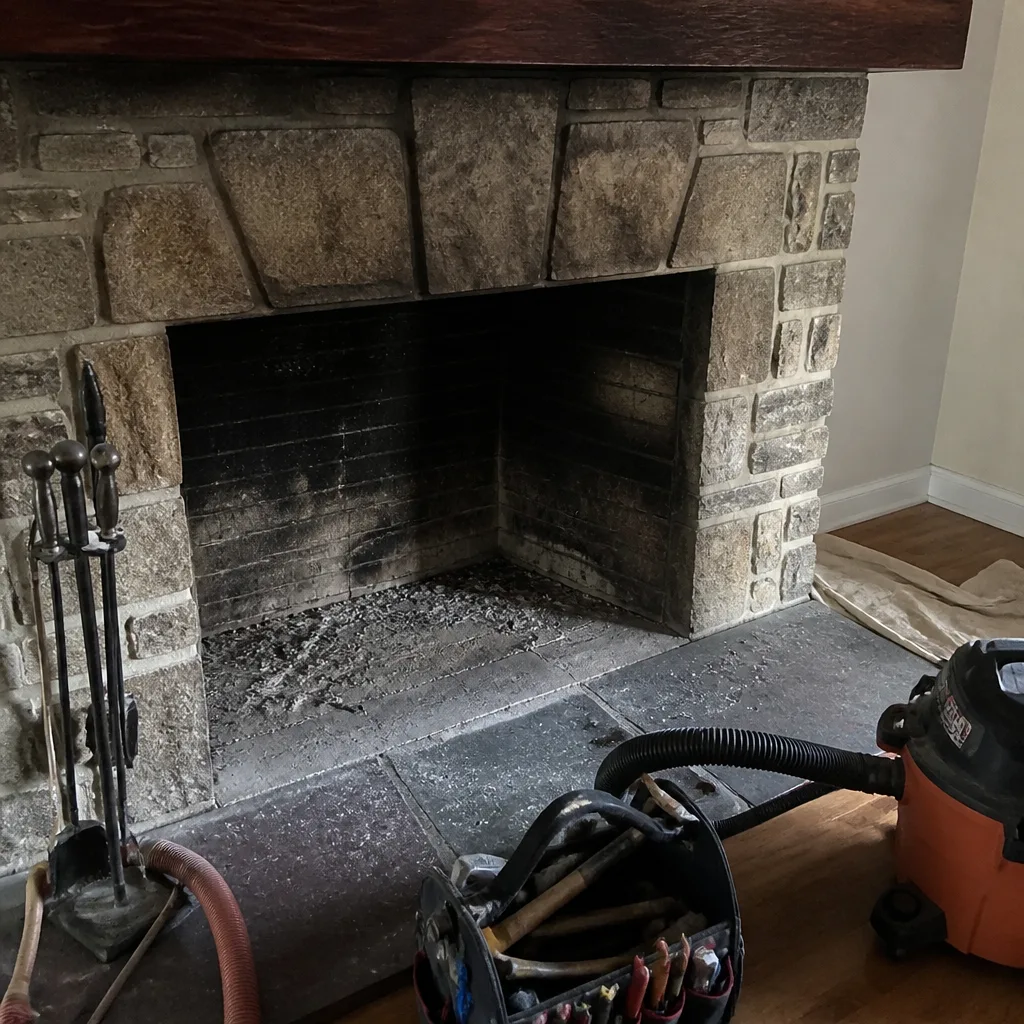
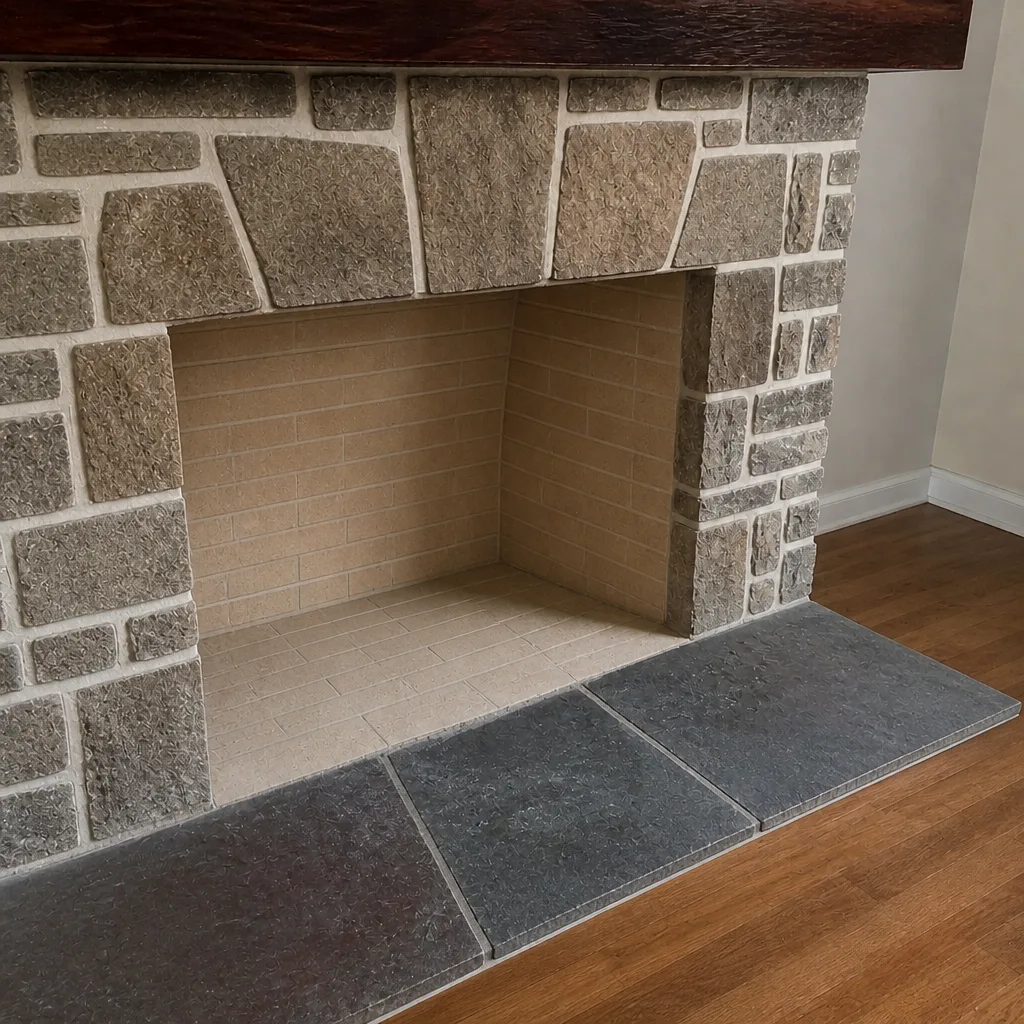
See the difference
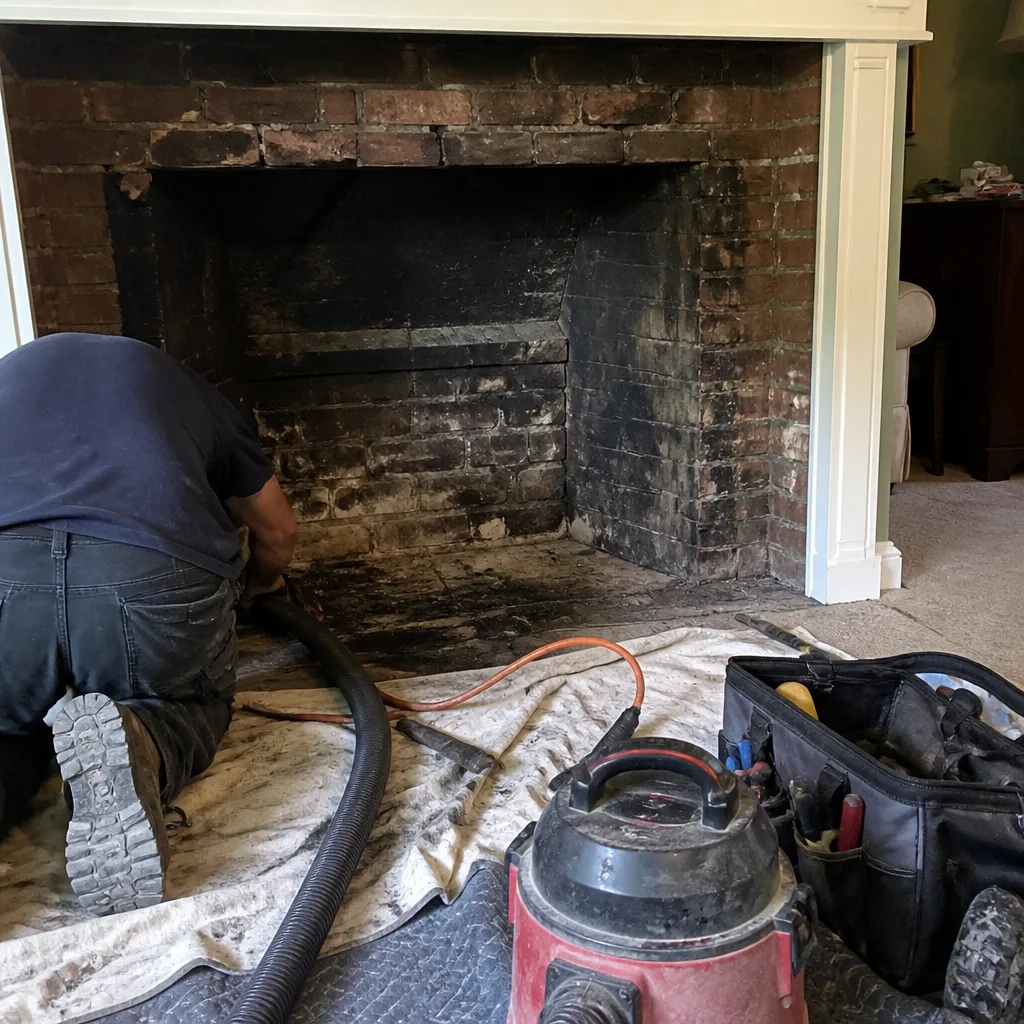 Before
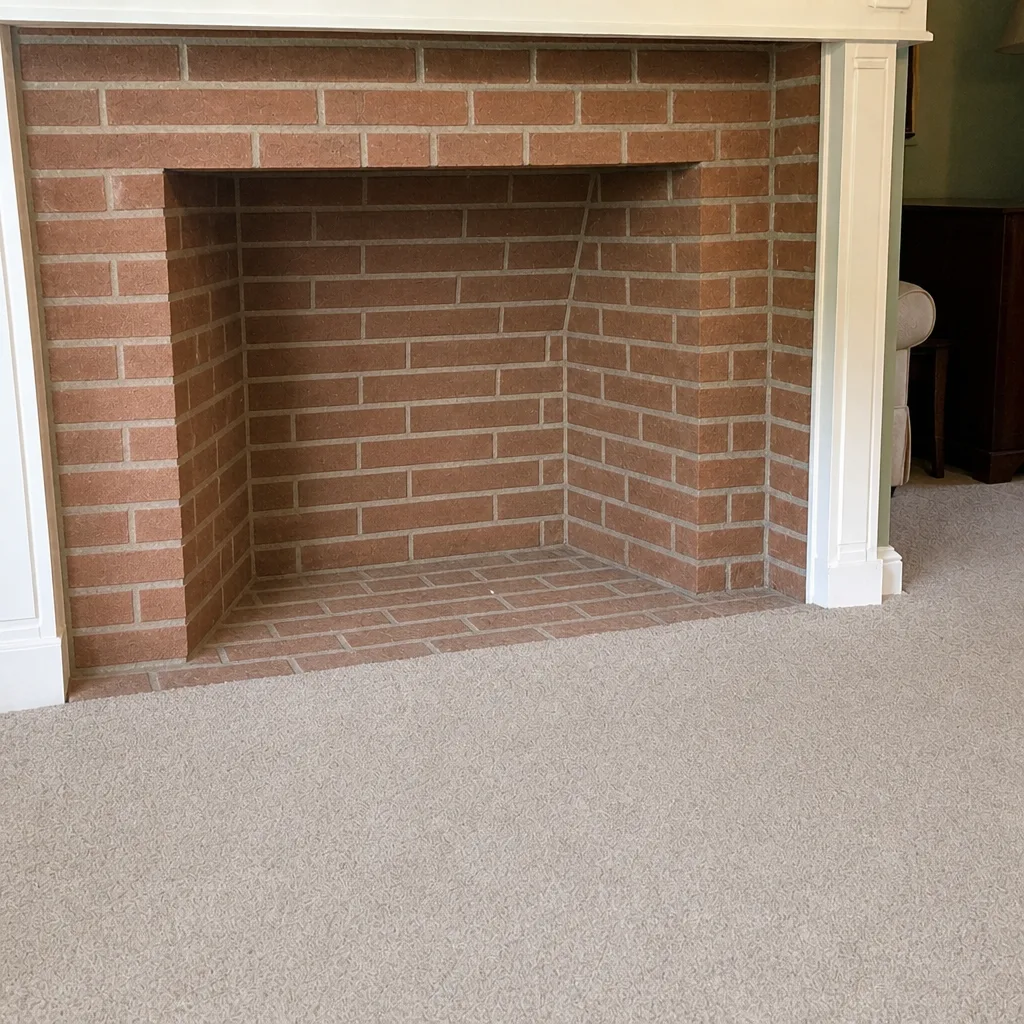 After
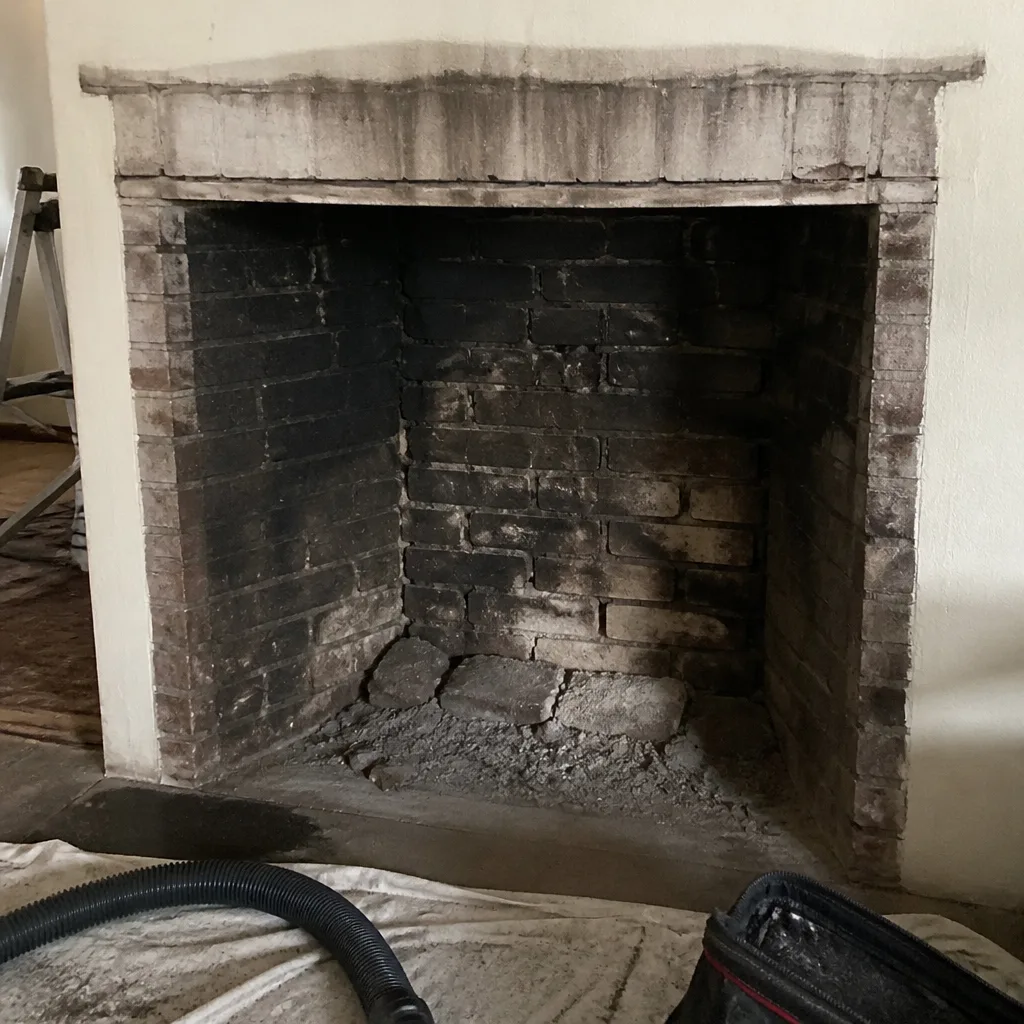 Before
 After
 Before
 After
When to Call a Professional
Call for a professional sweep when the chimney hasn’t been swept in a year or more, when you’ve burned wood heavily through a winter, or when you’ve moved into a Fox Chase home and don’t know its chimney’s history. Call also if you see any of the following: a smoky fireplace that backs up into the room, a strong creosote smell during warm weather, visible cracks in the exterior masonry, a damaged or missing cap, or a damper that won’t open or close freely. If you’ve had a chimney fire, even a small one that burned out on its own, a camera inspection should follow. The same applies if your home has a wood stove or insert that was installed without documented follow-up.
We connect you with state-licensed and insured local professionals, and we can work with your insurer if a repair is needed. Chimney Sweep Fox Chase offers free estimates in Fox Chase. Call (844) 526-7704 to book a sweep or a Level 2 inspection.
Frequently Asked Questions
A standard chimney sweep in Fox Chase typically runs $175 to $350 in 2026 for an open fireplace, with wood stoves and inserts at $225 to $400 and oil flues at $200 to $375. A Level 2 inspection with camera documentation adds $100 to $200. Call (844) 526-7704 for an exact quote, since it’s set per job by the written estimate.
A Level 2 inspection is the only way to see the inside of the flue from end to end, and it’s the tool that catches cracks, gaps, and failed liner connections a visual check misses. It’s especially worth booking if your home has changed hands recently, if you’ve had a chimney fire, or if your chimney’s history is unknown. If you’ve never had one on your Fox Chase home, this is the year to book it.
Annually is the general standard for a home that burns wood regularly, and more often if you burn frequently or notice heavy creosote buildup at each cleaning. Fox Chase homes with clay tile liners benefit from an annual visit because the freeze-thaw cycle there stresses the masonry, and small cracks caught early are far cheaper than a liner replacement. Call (844) 526-7704 to schedule.
Creosote accumulates in the flue and becomes flammable. A chimney fire can ignite it, and even a small chimney fire cracks clay tile liners that then let heat and gases into the surrounding framing. A skipped year or two is where a $350 cleaning turns into a $3,500 liner. Booking a sweep before burning season is the lowest-cost way to avoid that path.
Because the scopes usually differ. A cheap quote typically leaves out smoke chamber cleaning, written documentation, and camera inspection, which are the items that protect you. A professional quote names your liner type, covers both flues if you have them, and includes a written report. Ask two quotes the same seven questions and the difference in scope becomes obvious.
Sometimes yes and sometimes no, and the honest answer is that only a camera inspection can tell you which. A hairline crack in a structurally sound tile may be safe to monitor. A damaged damper or a cracked crown that’s letting water in usually shouldn’t wait. We’ll show you the footage and tell you plainly which category your repair falls into.
The Bottom Line
Chimney cleaning pricing in the Fox Chase area reflects scope, liner type, appliance type, access, and what a camera inspection finds. A $175 to $350 standard sweep is the baseline, and it’s worth every dollar because the sweep is where problems get caught and the written report is where they get documented. Repairs that follow a cleaning, from firebox repointing through a full reline, run from a few hundred dollars to several thousand depending on what the inspection shows. The cheapest quote is the cheapest because it covers less. The most expensive one is the consequence of skipping years. Pick a scope, not a price, and book before the next burning season.
Chimney Sweep Fox Chase handles the full service spectrum under one company: sweeping, cap and crown work, repair, liner installation and rebuilds, and fireplace repair. We use professional-grade materials, including DuraFlex and HeatShield systems, Gelco, Olympia Chimney, Famco, and Copperfield, and our technicians have up to 9 years of experience. Estimates are free and the written estimate sets the final price. Call (844) 526-7704 to book a sweep or an inspection. We answer 24/7, with fast dispatch from 7am to 7pm, Sunday through Friday.
Written by the team at Chimney Sweep Fox Chase.