
Top Signs You Need Chimney Cleaning Service – Don’t Ignore These
By the time your fireplace is smoking up the room, your flue is probably already at a third-degree creosote stage, and the warning signs came weeks earlier when they were easy to miss. The loud symptoms get the attention: smoke rolling past the damper, a smell that lingers in the living room. What actually tells you a chimney is overdue for cleaning tends to be quieter, and it shows up long before the fire stops drawing. Here are the signals we look for in Fox Chase, in the order they usually appear. If you’d rather not climb a roof to check for yourself, call (844) 526-7704.
The Oily, Asphalt Smell That Shows Up When the Fireplace Is Cold
A cold fireplace that smells faintly of tar or asphalt is one of the most reliable signs of creosote buildup you’ll ever get, and it’s more useful than anything you can see from the firebox. Creosote passes through stages as it accumulates. Early on it’s a light, flaky soot you can’t really smell. As it thickens into a glazed, hardened layer, it starts to release that oily odor, especially on a warm, humid day or when a draft pulls air back down the flue. If the smell is strong enough to notice from the next room, the buildup has usually gone past the easy stage.
Why trust your nose over your eyes? Because looking up a flue from the firebox shows you almost nothing past the first few feet. The glaze that matters forms higher up, where combustion gases cool and deposit. In our experience around Fox Chase, homeowners who describe that asphalt smell almost always have glazed creosote when we run a camera up the flue. Glazed creosote is the stage that ignites most readily, which is exactly why we treat the smell as a prompt to get the chimney inspected rather than a quirk to live with.
Fires That Are Hard to Start, or a Draft That Quit on You
Partial obstruction changes how a fire behaves before you can see the blockage. A flue that used to light easily and pull hard starts needing kindling stacked just so, and the fire seems to fight you. Smoke puffs into the room when you first light it, then settles. That pattern comes from restricted airflow up the flue, and the usual culprits are soot accumulation, a nest, or a collapsed liner section narrowing the passage. The fire is telling you the exhaust path is smaller than it should be.
Draft problems are worth taking seriously because they affect more than convenience. A weak draft means combustion gases aren’t leaving the house the way they should. Carbon monoxide is odorless, so a poorly drafting chimney gives you no obvious warning beyond the fire’s behavior. That’s why we tell Fox Chase homeowners to treat a sudden change in draft as a reason for a professional inspection, not something to work around with more newspaper and patience.
Black Damper Components and Soot Around the Firebox Opening
Some discoloration around a firebox is normal and comes with years of use. The line between normal and concerning is worth knowing. A light, even dusting of soot near the opening is what any working fireplace accumulates. What’s not normal is a thick, sticky black coating on the damper itself, soot caked on the firebox walls in heavy flakes, or black streaks climbing up the face of the surround. Those tell you combustion byproducts are condensing in places they shouldn’t reach in a healthy, clean-burning system.
In our experience working chimney repair in Fox Chase, heavy soot deposits near the damper often come with a second finding: a damper that no longer seals properly or hardware that’s corroded from moisture. That’s the kind of thing a sweep catches early. Cleaning removes the soot, but it also gives a technician a clear look at the damper and firebox to see whether anything needs adjusting before it becomes a bigger repair.
Animal Activity: Sounds, Debris, and an Ammonia Smell
Wildlife in a chimney often announces itself through sound or smell before you ever see evidence. Chattering or scratching from the flue on a quiet morning usually means birds or squirrels have taken up residence. Nesting debris dropping into the firebox, like twigs, grass, or fine insulation-looking material, points to a nest built above the damper. And an ammonia smell, which is easy to mistake for something else, is a strong indicator of animal waste decaying in the flue. Each of these signals something about your cap.
- Chattering or scratching: an animal is living in the flue. It needs to be removed safely before the chimney can be cleaned or used.
- Nesting debris in the firebox: the flue is partly blocked, which restricts draft and poses a fire risk if the nest ignites.
- Ammonia odor: animal waste is present. This needs clearing, and it’s a sign the cap has failed or is missing.
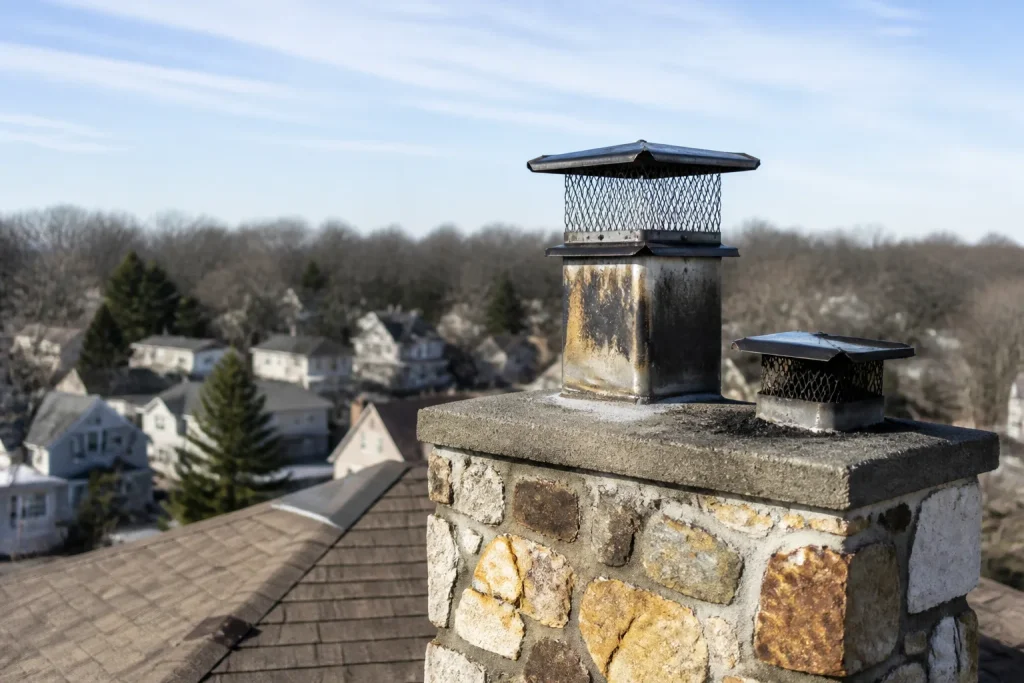
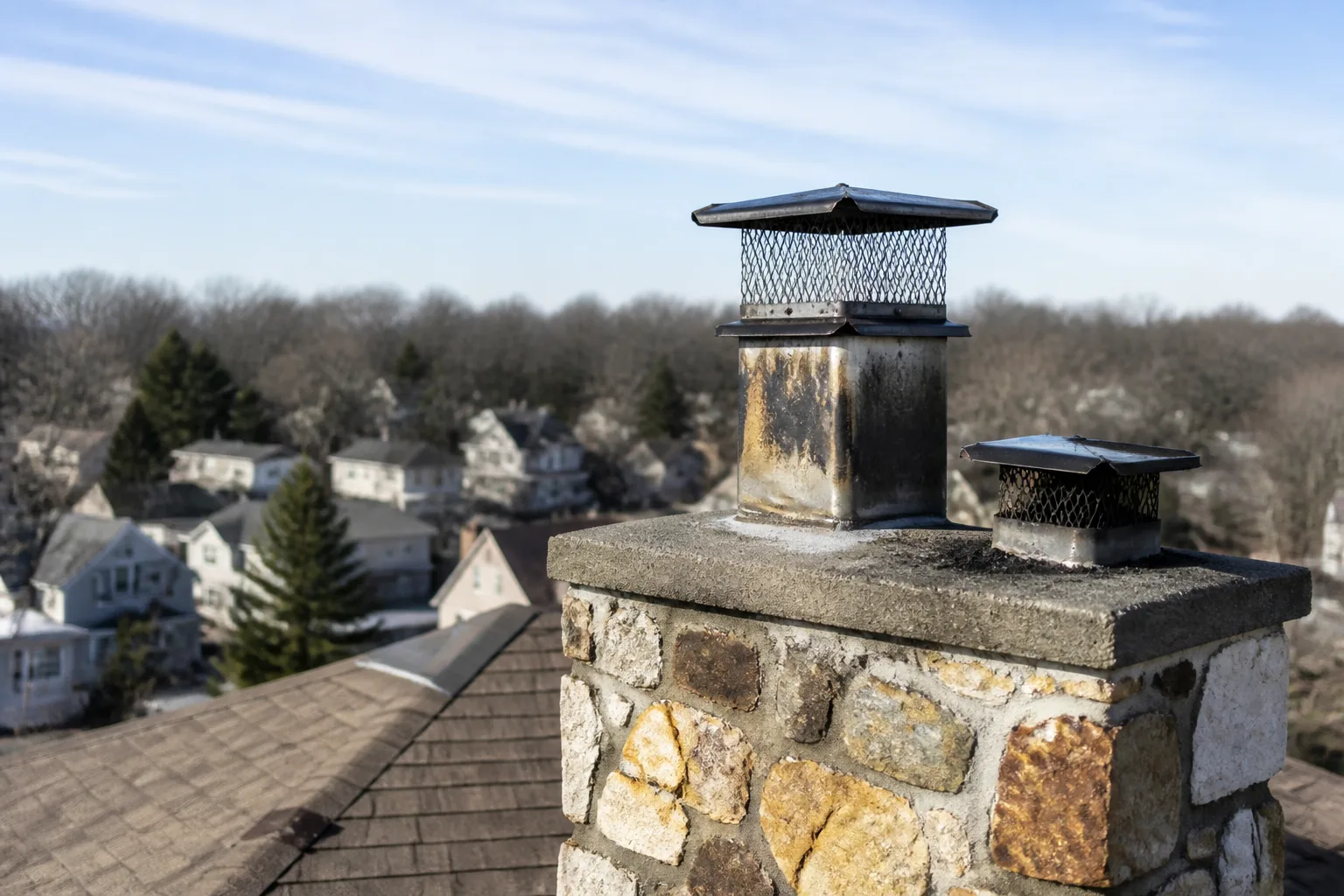
A proper chimney cap & crown is what keeps animals out in the first place. If you’re hearing or smelling activity in your flue, the fix usually starts with removing the animal and sealing the top so it doesn’t happen again.
The Glass-Door Test: What Black Deposits Tell You
Your fireplace glass doors are a diagnostic tool if you read them correctly. After a single fire, a healthy setup leaves a light gray haze on the glass. Heavy, black, sticky deposits after just one burn tell a different story. That coating comes from incomplete combustion, and it usually points to one of two things: wood that’s too wet to burn cleanly, or not enough air reaching the fire. Wet wood and a starved air supply both produce more smoke and more creosote, which means the glass is warning you about buildup happening inside the flue.
Before you assume the chimney needs sweeping, check the wood. Seasoned firewood that’s had time to dry burns clean and leaves far less residue. Wet or “green” wood is a common culprit in Fox Chase. If switching to dry wood and opening the air intake still leaves heavy black deposits after one fire, that’s your signal to get the flue inspected. The chimney sweep clears what’s there, and the inspection tells you whether the combustion problem is worth addressing further.
When to Call a Pro
Any one of these signs on its own is worth a look from a professional, and two or more together means you should book an inspection before the next fire. Glazed creosote, restricted draft, and animal blockage are all things a homeowner shouldn’t try to clear without the right tools and a clear view of the flue. A trained technician using a camera can show you exactly what’s inside, which matters when you want to know whether a cleaning will do it or whether the liner needs attention. We work with professional-grade liner systems like DuraFlex and Olympia Chimney when a flue needs more than a sweep, so the same visit that finds a problem can address it. Our technicians have up to 9 years of experience reading these signs, and we tell you what we found and what fixing it actually involves.
Related services in Fox Chase: if your inspection turns up a damaged flue, we handle chimney repair alongside the sweep.
The Bottom Line
Don’t wait for smoke and smell to tell you your chimney needs cleaning. That asphalt odor on a cold fireplace, a fire that’s suddenly hard to light, sticky black deposits on the damper, animal sounds in the flue, and heavy black glass after one burn are all earlier, more useful signals that buildup or another problem is present. Catch them early and a routine cleaning handles most cases. If you’re in Fox Chase and need help, Chimney Sweep Fox Chase offers free estimates. Call (844) 526-7704. We answer 24/7. Fast dispatch from 7am to 7pm, Sunday through Friday.
Frequently Asked Questions
Most wood-burning chimneys should be swept once a year, or sooner if you burn heavily and notice any of the signs above. The annual inspection is what catches problems before they become repairs. If buildup reaches a glazed creosote stage, cleaning may be needed more often. Call (844) 526-7704 for a free estimate.
Creosote keeps accumulating and hardens into the glazed stage, which ignites more readily and is harder to remove. Draft can weaken, and in serious cases the liner can be damaged by a flue fire. Skipping cleaning doesn’t cause a problem overnight, but the risk builds with every burn. Call (844) 526-7704 for a free estimate.
Homeowners can remove light surface soot, but clearing glazed creosote or inspecting the full flue safely needs professional tools and a camera. More importantly, a self-cleaning won’t reveal a cracked liner or a draft problem the way an inspection will. Call (844) 526-7704 for a free estimate.
Not necessarily this minute, but it’s a strong sign of glazed creosote and worth an inspection soon rather than waiting. An odor you can smell across a room usually means the buildup has moved past the easy stage. A qualified sweep will tell you exactly what’s there. Call (844) 526-7704 for a free estimate.
Written by the team at Chimney Sweep Fox Chase.
Need Chimney Cleaning Help?
Call Chimney Sweep Fox Chase - the local pro we connect you with is licensed and insured, here with fast help in Fox Chase.
(844) 526-7704