
Emergency Chimney Sweep Near Me: What Fox Chase Homeowners Should Do First
Most chimney problems that feel like emergencies at 9pm are urgent, not dangerous. A few are genuinely dangerous, and the difference comes down to three things you can check in the first ten minutes: is there an active fire in the flue, is smoke backing into the room, and is the flue unlined. In Fox Chase, where a lot of rowhouses still run original brick chimneys with no liner, that third question matters more than most homeowners realize. Here’s how to sort a real emergency from a next-day call, and exactly what to do while you wait.
If you’d rather have a professional look instead of guessing from the living room, call (844) 526-7704. We answer 24/7, and fast dispatch runs from 7am to 7pm, Sunday through Friday.
How Do You Know If It’s an Active Chimney Fire?
An active chimney fire is a fire burning inside the flue itself, and it does not always look like a fire from the hearth. The signs that matter most are the ones you hear and feel before you see anything.
Watch and listen for these:
- A roaring or rumbling sound coming from the chimney, often described as sounding like a distant train or a low-flying plane.
- Intense heat radiating from the fireplace wall, the mantel, or the chimney breast in the room above.
- Visible flames or dense smoke pouring from the top of the chimney, sometimes with sparks.
- A strong, hot, tar-like smell in the room or outside near the stack.
- Popping or crackling that continues after you’ve stopped adding wood.
In Fox Chase rowhouses, the chimney breast runs up through the middle of the home, so heat from a flue fire can transfer into wall cavities and shared party walls. That’s why the sound and the heat matter more than the visible flame. If you have any two of the signs above, treat it as an active fire and move to the next section.
One note on what a chimney fire is not: a puff of smoke when you first light the fire, or a little spillage while the flue is still cold, is normal draft behavior. It’s the sustained roar, the sustained heat, and the sustained smoke that tell you something is burning where it shouldn’t be.
What Should You Do in the First 60 Seconds of a Chimney Fire?
Call 911 first. Then close the damper if you can reach it safely, close the glass doors, and get everyone out of the house. Do not throw water into the firebox.
Here is the sequence in order:
- Get people out and call 911. A chimney fire can spread into the framing, and the fire department is the only party who can confirm the structure is safe.
- Close the damper if the handle is accessible and you are not reaching into heat or smoke. This cuts some of the air feeding the fire.
- Close the glass doors on the fireplace to limit the air draw from the room.
- Do not use water on the firebox. Water on a firebrick firebox that is at chimney-fire temperature can crack the brick and send steam and debris back into the room.
- Do not close the chimney cap or block the top. The flue needs to vent.
- After the fire department clears the house, call a chimney professional for an inspection before you use that fireplace again.
We know it’s tempting to grab a bucket. We’ve seen what a cracked firebox looks like after someone did. The firebox and the flue are built to contain heat, not to be doused.
Which Chimney Problems Feel Urgent but Can Wait Until Morning?
Not every chimney call needs a technician the same night. If there is no fire, no smoke in the living space, and no carbon monoxide alarm, most of these can be scheduled for the next available slot and handled without drama.
Strong smoke smell after a storm. A downdraft or a shifted cap can push smoke back into the room. If it happens once and stops, it’s usually a draft issue, not a fire. It still needs a look, because a loose cap or a cracked crown lets water in, and water is the slow killer of masonry chimneys.
Cap missing or damaged after wind. A missing cap lets rain, birds, and debris straight into the flue. That’s a genuine problem, but it’s not a tonight problem. We work with Olympia Chimney and Copperfield caps that fit the flue properly and stay put through the next storm.
A one-time backdraft episode. A cold flue, a tight house, or a bathroom fan running can pull smoke the wrong way. If it happens once and clears, note the conditions and mention them when you call. If it repeats every fire, it’s worth an inspection.
Smoke staining on the fireplace face. That’s evidence of past spillage, not an active emergency. It’s the kind of thing an inspection explains.
If you’re in Fox Chase and you’re not sure which bucket your problem falls into, call and describe it. We answer 24/7, and a call outside dispatch hours is booked into the next opening, Sunday through Friday, 7am to 7pm.
What Should You Tell a Chimney Company When You Call After a Fire?
Give the person on the phone four things: that there was a fire, when it happened, what the fire department did, and whether the fireplace has a liner. That’s enough to route your call correctly and to tell you what to expect on the visit.
Be ready with:
- Whether the fire department responded and whether they opened the wall, the damper, or the cap.
- The date of the fire and whether the fireplace has been used since.
- Any visible damage: cracked firebrick, warped damper, scorched mantel, smoke staining.
- Your insurance situation: whether you’ve opened a claim, and your carrier’s name.
For insurance, documentation is what matters. Ask for a written inspection report with photos of the flue interior, the firebox, the damper, and the crown. Insurers want to see the condition before and after, not a verbal description. A camera inspection with a photo report is standard for this kind of claim, and any chimney company worth calling should be able to provide one.
If your Fox Chase home has an older brick chimney, the inspection may need to include a look at the liner itself. Many mid-century Fox Chase chimneys were built without one, or with a clay tile liner that has cracked over time. A post-fire inspection tells you whether the liner is intact or needs resurfacing or replacement.
Why Can’t You Use the Fireplace Again Until a Level 2 Inspection Is Done?
A Level 2 inspection is the standard post-fire inspection, and it covers the flue interior with a camera, plus accessible portions of the chimney exterior and the attic and crawlspace where the chimney passes through. Anyone telling you “it looks fine” without that inspection is guessing.
The reason it matters: a chimney fire damages the liner in ways you cannot see from the hearth. The flue may still draw. The firebox may look normal. But a cracked clay tile or a failed refractory joint lets heat and carbon monoxide reach the framing and the living space. The next fire is the one that finds the weak spot.
If the inspection finds a damaged clay tile liner, two repair paths exist. A HeatShield ceramic resurfacing restores a deteriorated flue liner without a full tear-out, and it’s the right call when the existing liner is sound in structure but worn on the surface. When the liner is too far gone for resurfacing, a DuraFlex flexible stainless liner is the standard fix for an existing masonry flue. Both are professional-grade systems, not big-box inserts, and both are part of the work we handle. If the damage reaches the firebox, a chimney repair scope covers it. If the crown or cap was damaged in the fire, that’s chimney cap & crown work.
Until the Level 2 inspection is done, the fireplace stays cold. That’s the one rule we don’t soften.
When Should You Call a Pro Instead of Waiting?
Call a pro the same day if there’s active smoke in the living space, a carbon monoxide alarm going off, visible damage to the firebox, or a smell of smoke that won’t clear after the fire is out. Those are the four signals that move a problem from “schedule it” to “get eyes on it now.”
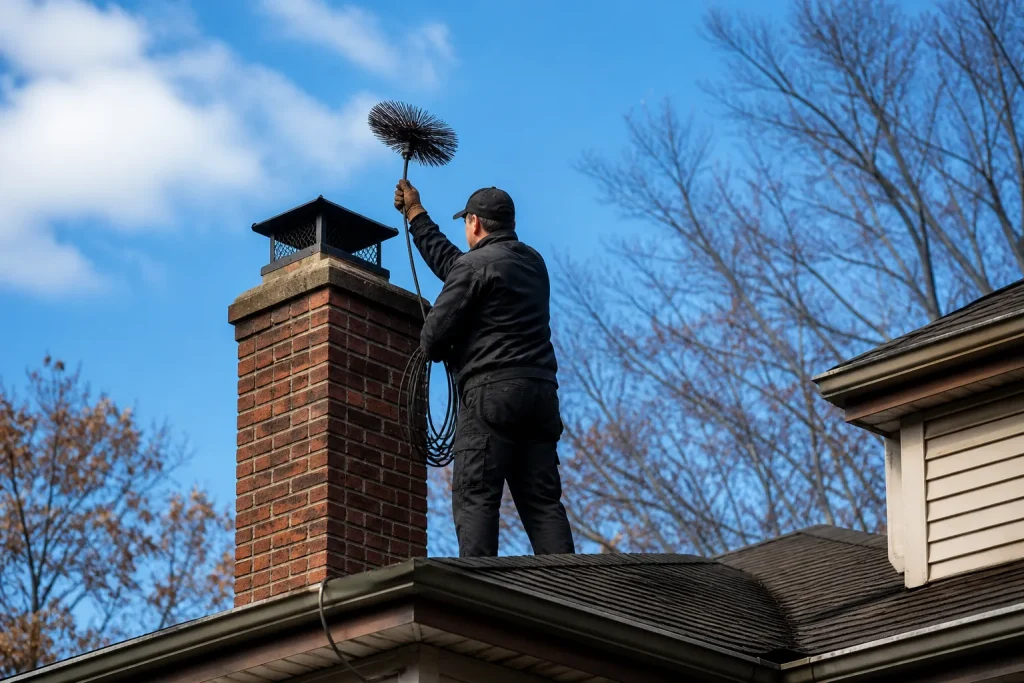
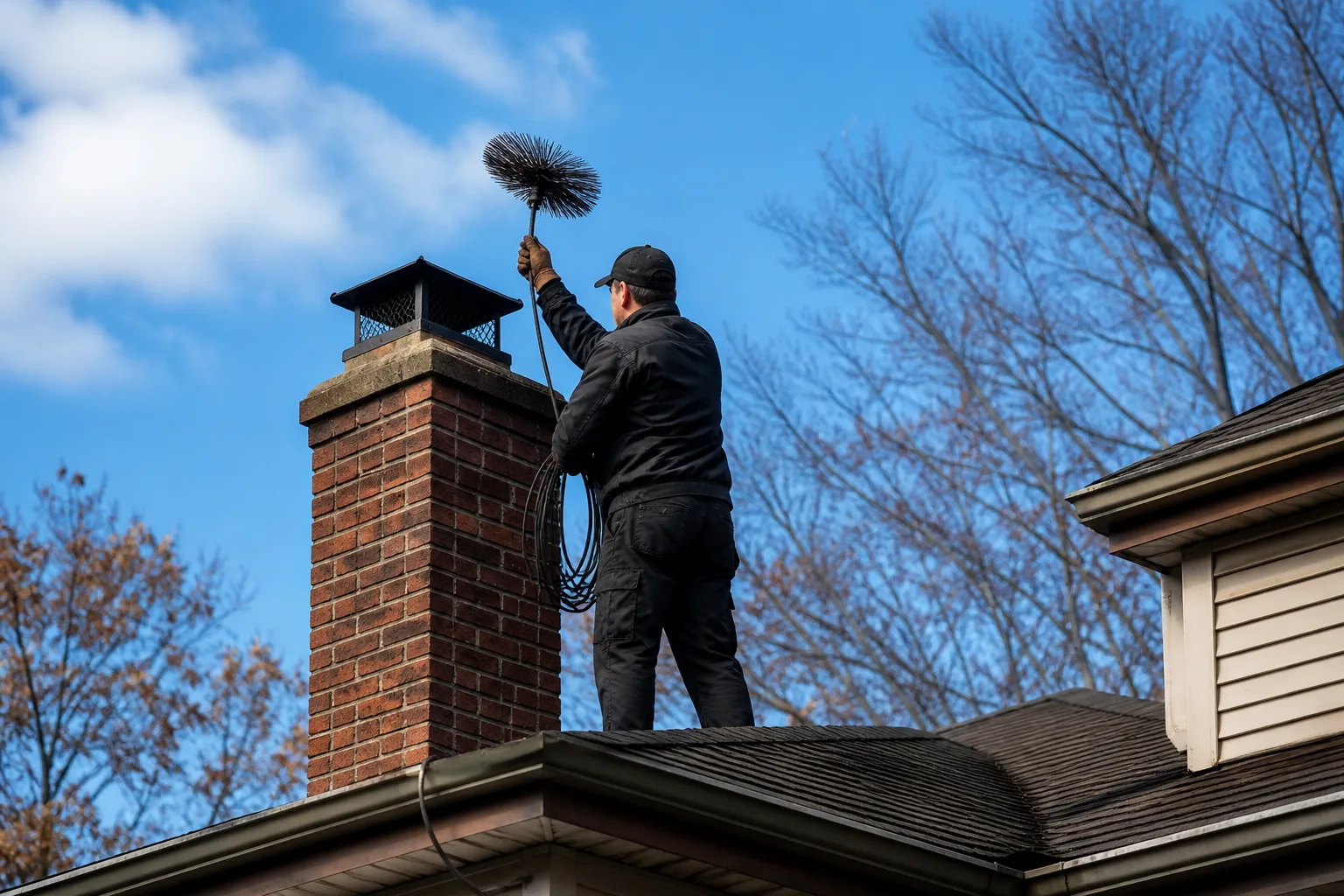
For everything else, the honest answer is that a routine chimney sweep and inspection, scheduled properly, catches most problems before they become emergencies. Our technicians have up to 9 years of experience, and the first thing we do on a visit is tell you what we found, what it means, and what fixing it involves. If a problem can safely wait, we say so.
Related services in Fox Chase: if you’re dealing with a post-fire inspection, a damaged liner, or a cap that came loose in the wind, we handle all of it through Chimney Sweep Fox Chase. One company, five service categories, no coordinating between contractors.
If you’ve got soot on your mantel and no idea why, that’s also worth a call. It’s usually a draft issue. Sometimes it’s the cap. Occasionally it’s the dog. We’ll figure it out.
The Bottom Line
The three things to do in the first ten minutes: check for the sound and heat of an active fire, get everyone out and call 911 if you find it, and don’t use water on the firebox. Everything else can wait for a scheduled inspection. If there’s no fire, no smoke in the room, and no CO alarm, you have time.
What you shouldn’t do is use the fireplace again after a fire without a Level 2 inspection. That’s the one line that matters more than any other advice in this post. A HeatShield resurfacing or a DuraFlex liner is a fraction of the cost of repairing fire damage to framing, and the inspection tells you which one, if either, you actually need.
If you’re in Fox Chase and need help, Chimney Sweep Fox Chase offers free estimates. Call (844) 526-7704. We answer 24/7. Fast dispatch from 7am to 7pm, Sunday through Friday. We work with the professional-grade brands chimney specialists rely on, we tell you what we found, and the written estimate is what sets the price.
Frequently Asked Questions
Once a year for a home that burns regularly, and more often if you burn green wood or use the fireplace heavily through the winter. The annual sweep is also the inspection that catches a cracked liner or a failing crown before it turns into a bigger repair. Call (844) 526-7704 for an estimate.
Yes. Any chimney fire, however small it looked, warrants a Level 2 inspection before the fireplace is used again. The whole point is to check the liner and the framing connection with a camera, because neither is visible from the hearth. Call (844) 526-7704 to get one scheduled.
No. A sweep clears creosote; it doesn’t assess fire damage to the liner or the firebox. Sweeping a damaged flue can also make things worse. The inspection has to come first, and it needs a camera and a trained eye. Call (844) 526-7704 for a free estimate.
A strong smoke smell after a storm usually means a cap came loose or the draft is being pushed back into the house. It’s worth a call, but it’s not always a same-night emergency. Describe it on the phone and we’ll tell you what we think. Call (844) 526-7704.
Written by the team at Chimney Sweep Fox Chase.
Need Chimney Cleaning Help?
Call Chimney Sweep Fox Chase - the local pro we connect you with is licensed and insured, here with fast help in Fox Chase.
(844) 526-7704